
CENTRAL INDIA HERITAGE
Temples, Forts & Forgotten Kingdoms
Step beyond India’s most travelled routes & discover a region rich in architectural wonders, medieval kingdoms and living heritage. From the remarkable temples of Khajuraho and the timeless beauty of Orchha to the grand fortresses of Gwalior and Mandu, Central India reveals a fascinating chapter of India’s history that remains wonderfully uncrowded

Featured Destinations
- Khajuraho – Exquisite UNESCO‑listed temples where intricate stone carvings bring a thousand years of devotion and mythology to life.
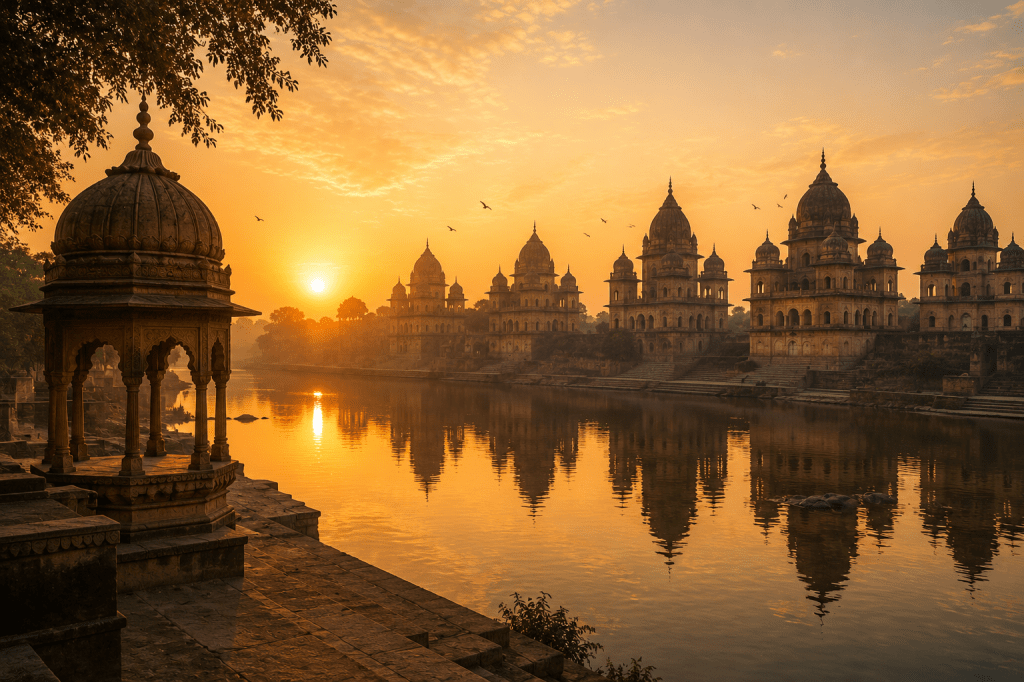
- Orchha – A riverside kingdom of cenotaphs, palaces and quiet ghats, perfect for slow sunset strolls along the Betwa.
- Gwalior – A storied hilltop fort, elegant palaces and sacred rock‑cut sculptures overlooking a vibrant, musical city.
- Mandu – Romantic ruins scattered across a mist‑wrapped plateau, with Afghan‑era architecture and panoramic valley views.
- Maheshwar – Sacred steps, hand‑loomed Maheshwari textiles and serene boat rides on the Narmada at golden hour.
- Bhopal – Lakeside elegance, Indo‑Islamic heritage and a gateway to both tribal art traditions and modern museums.
- Sanchi – Ancient Buddhist stupas and monastic remains, offering a contemplative pause amid serene, tree‑lined hills.
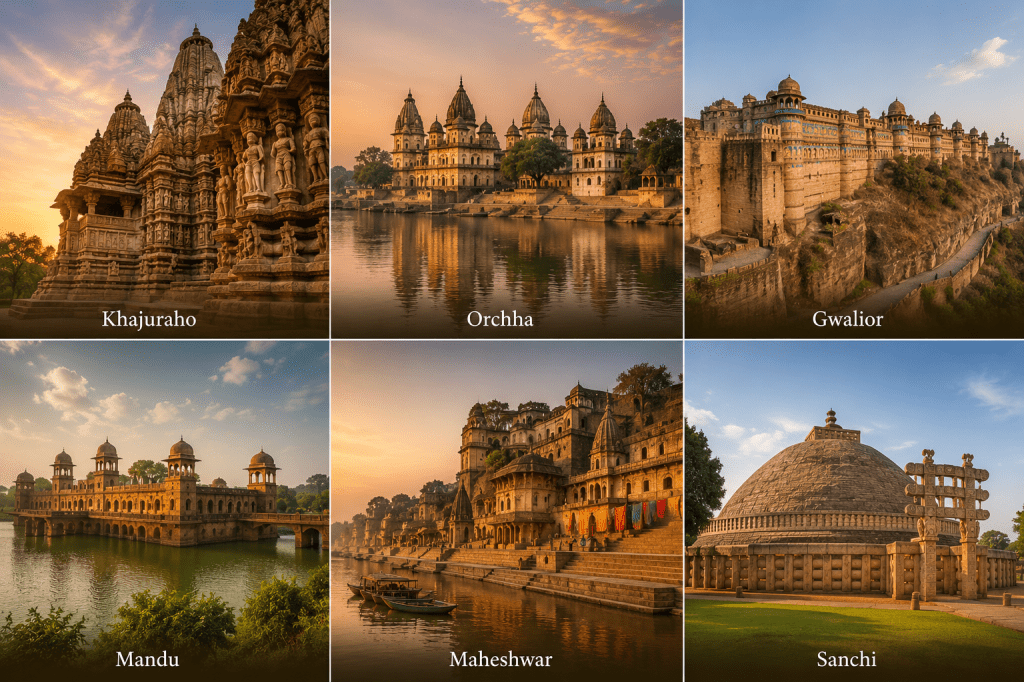
khajuraho, orchha, gwalior – 6 days
Palaces, Temples and quiet Luxury. Step into central India’s layered history – from the sculpted temple walls of Khajuraho to the riverside palaces of Orchha and the commanding hilltop fort of Gwalior. This journey balances expert‑led sightseeing with time to linger in palace‑style hotels, enjoy good food, and absorb the atmosphere at an unhurried pace.
This is a sample quiet‑luxury itinerary for families and older couples. We’ll tailor the pacing, hotel choices and experiences to your interests, mobility and travel dates.
Day 1 – Arrive Khajuraho: Temples at Golden Hour
Arrive in Khajuraho, where you’re met by your private driver and transferred to a boutique or heritage‑style hotel set in tranquil gardens.
In the late afternoon, begin with a gentle introduction to the Western Group of Temples (UNESCO‑listed). Explore a handful of key shrines as the light softens, focusing on the storytelling, symbolism and craftsmanship rather than rushing from site to site.
Return to your hotel for a relaxed dinner. If timings allow, you can stay on for the sound & light show at the temples.
Day 2 – Khajuraho: Sacred Art & Village Life
Start early to see more of Khajuraho at its quietest. With your private guide, continue through the Western Group, then move on to the Eastern and Southern groups – often overlooked, but wonderfully serene. Later, return to the hotel for a leisurely breakfast or brunch and time by the pool or spa. In the afternoon, choose between:
- A curated visit to a nearby village or craft workshop, or
- Simply slowing down with a walk through the lanes and sunset viewpoints around the temple complex.
Evening at leisure, with the option of a chef‑led tasting menu highlighting regional flavours.
Day 3 – Khajuraho → Orchha: Riverside Palaces & Cenotaphs
Drive: Khajuraho → Orchha – approx. 170–180 km / 4–5 hours
After breakfast, depart by private car for Orchha. The drive takes you through rural Madhya Pradesh, with the option to pause in small towns or scenic spots along the way. Your hotel can prepare a light snack or picnic for the journey. Arrive in Orchha and check into a heritage property overlooking the Betwa River or the cenotaphs. Later, take an unhurried walk through the old town to get a feel for daily life.
Towards sunset, head to the riverbank or a rooftop terrace to watch the silhouettes of Orchha’s chhatris (cenotaphs) emerge against the evening sky. If you wish, a visit to a local temple for the evening aarti (prayer ceremony) can be arranged.
Day 4 – Orchha → Gwalior: From Riverside Forts to a Royal City
Drive: Orchha → Gwalior – approx. 120–130 km / 3–3.5 hours
This morning, explore the Orchha Fort complex with your guide – including Jahangir Mahal and Raj Mahal, known for their architecture and faded frescoes. You’ll also see the soaring Chaturbhuj Temple and stroll among the cenotaphs, with time to pause for photographs rather than ticking off a checklist.
After an early lunch, continue by road to Gwalior. On arrival, check into a palace‑style hotel or the most characterful heritage property available, where you’ll spend the next two nights.
The remainder of the afternoon is free to settle in: perhaps a swim, a walk in the gardens or a drink on the terrace as the city lights come on.
Day 5 –Gwalior: Fort, Palaces & City Experiences
Begin the day with an early visit to Gwalior Fort, dramatically set on a sandstone plateau above the city. Explore the richly decorated Man Singh Palace, stroll the ramparts and view the remarkable rock‑cut Jain sculptures carved into the hillside.
Return to your hotel late morning for a relaxed lunch and downtime.
In the afternoon, dive deeper into Gwalior’s royal and urban life:
- Visit Jai Vilas Palace Museum, with its grand European‑influenced interiors and crystal chandeliers.
- If you wish, stop at Sas Bahu Temples for delicate stone carving, or visit Gurudwara Data Bandi Chhod for a contrasting spiritual atmosphere.
End the day back at your palace hotel with a refined dinner – perhaps a tasting menu drawing on both royal recipes and contemporary Indian cuisine.
Day 6 – Gwalior → Delhi (or Onward)
Today you leave central India’s royal heartlands behind.
- By road: Gwalior → Delhi – approx. 320–330 km / 5–6 hours via expressway, with your private driver and flexible comfort stops en route; or
- By Air : Transfer to the airport for connecting onward flights to major metros in India
explore more journeys
- Central India Heritage : Khajuraho, Orchha, Gwalior
- Narmada Heritage Journey : Indore, Maheshwar, Mandu
- Central India Wildlife trail : Panna, Bandhavgarh, Kanha and Pench National Parks
- Buddhist and Cultural Heritage Trail : Sanchi, Udayagiri, Bhopal
best time to visit
- October–March (best overall) – Pleasant, mostly dry weather makes it ideal for exploring forts, temple complexes and hilltop ruins at a relaxed pace. Clear skies and cooler evenings suit both families and senior couples, and this is the most comfortable time for longer drives between Gwalior, Orchha, Khajuraho, Mandu and Maheshwar.
- July–August (monsoon) – Short, often intense showers; landscapes around Mandu and Maheshwar turn lush and green, which can be beautiful. Roads can be slower and sightseeing more weather‑dependent, so this suits returning visitors who prioritise atmosphere over a packed schedule.
Beyond the guidebook
This journey is about how it feels to be in these places when the crowds thin: drifting past cenotaphs at dusk on the Betwa, pausing with your guide in front of one exquisite carving in Khajuraho rather than twenty, hearing temple bells and evening aarti rise up to Gwalior Fort, and returning each night to a calm, character‑filled palace hotel. It’s a quietly curated rhythm of art, landscape and lived‑in history, with enough space left open for serendipity.
- Stay in characterful palace and heritage hotels
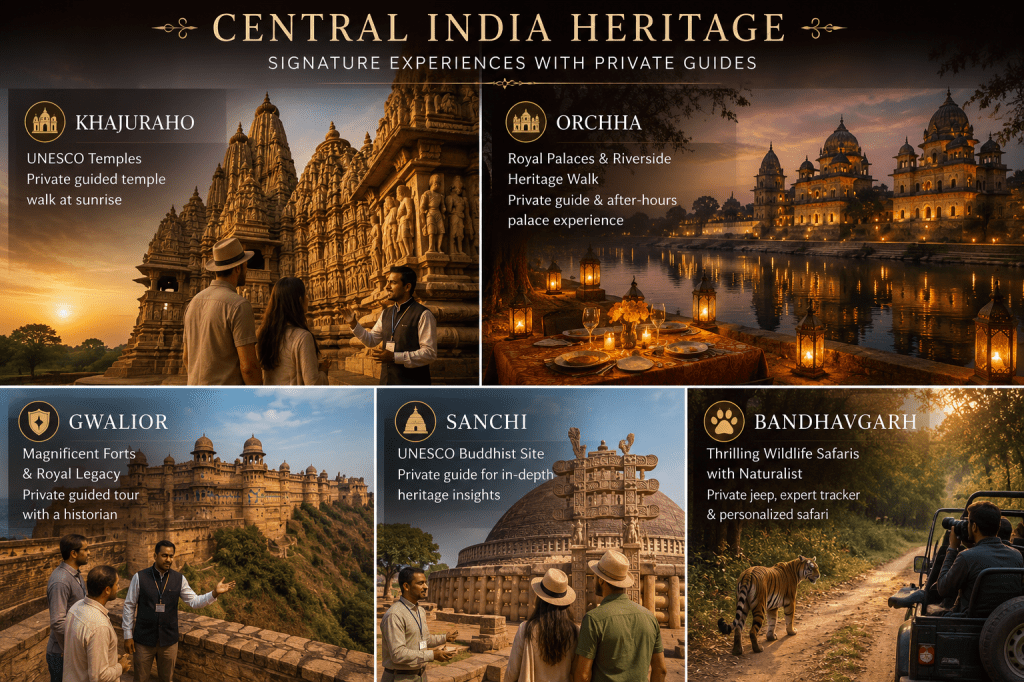
Sleep in restored palaces and heritage properties with gardens, courtyards and terraces, rather than generic city hotels – quiet, atmospheric bases that still offer modern comfort, good linen and attentive service. - Expert‑led temple exploration in Khajuraho and Golden hour views
Explore the Western, Eastern and Southern groups of temples with a specialist guide who focuses on stories, symbolism and art history, instead of rushing from temple to temple. Visit when the light softens and crowds thin, with time to pause, photograph and simply absorb the setting rather than ticking off monuments. - Slow touring of Orchha Fort complex
Visit Jahangir Mahal, Raj Mahal and Chaturbhuj Temple at an unhurried pace, focusing on vantage points, fresco details and stories of the Bundela rulers, with flexibility to stop for coffee or photographs. - Curated visit to Jai Vilas Palace Museum
See the grand salons, chandeliers and royal memorabilia of Jai Vilas with context: a guided visit that turns an overwhelming museum into a focused, engaging insight into Gwalior’s royal past.

